
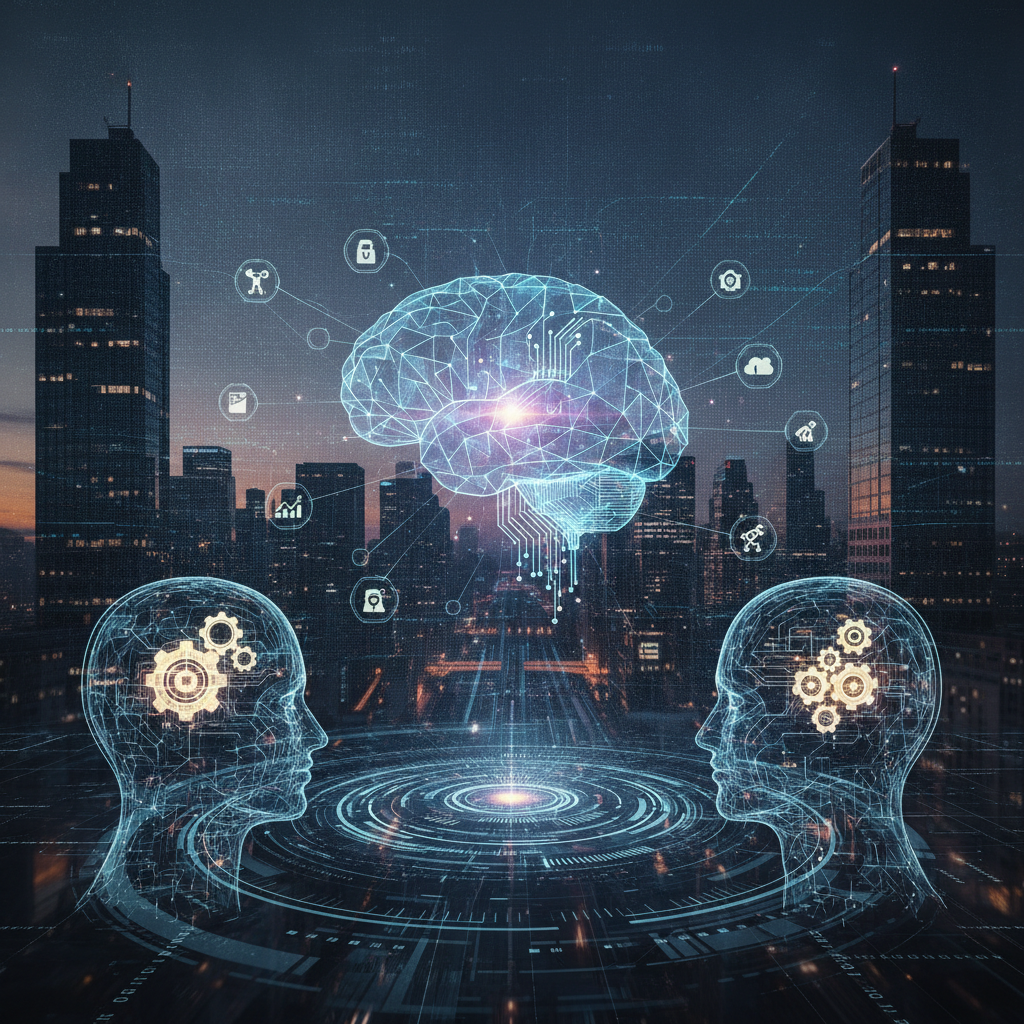
Artificial intelligence is rapidly transforming every facet of business, from customer interactions to operational efficiencies. For leaders and teams at Digicoms, who are already building agent-ready websites and navigating the complexities of AI agents, the question isn't whether to engage with AI, but how to equip your workforce with the essential AI skills needed to thrive. The most critical AI skills for businesses today include technical proficiencies in AI tools and data, alongside crucial human-centric abilities like critical thinking, ethical reasoning, and adaptability, which empower teams to effectively integrate and manage AI technologies.
This guide will walk you through the key AI skills your organization needs, distinguishing between the technical foundations and the indispensable human capabilities that will truly set your business apart.
What Exactly Are "AI Skills"?
AI skills encompass the knowledge and capabilities required to understand, develop, deploy, manage, and interact effectively with artificial intelligence technologies. These skills are broad, spanning from highly technical proficiencies in data science and machine learning to crucial human attributes like problem-solving and ethical judgment. They are not limited to AI specialists; rather, they are becoming increasingly relevant across all roles and departments as AI integrates into everyday business operations.
For instance, understanding how AI agents operate is a foundational AI skill for anyone looking to optimize digital business processes.
Why AI Skills are Non-Negotiable for Modern Businesses
Investing in AI skills is no longer just about staying ahead; it's about ensuring your business's relevance and resilience. AI-powered tools and platforms are enhancing productivity, enabling deeper customer insights, and automating repetitive tasks, creating a competitive advantage for those who can harness them. For Digicoms' audience, this translates directly to better ranking on Google, improved recommendations from AI answer engines, and more efficient lead generation.
Organizations with strong AI literacy can:
- Innovate Faster: Leverage AI to prototype new products and services, accelerating time to market.
- Optimize Operations: Use AI to streamline workflows, reduce costs, and improve efficiency.
- Enhance Decision-Making: Access advanced analytics and predictive insights for more informed strategic choices.
- Improve Customer Experience: Deploy AI-driven tools like chatbots and personalized recommendations for superior service.
- Attract and Retain Talent: Become a forward-thinking workplace that appeals to top talent.
The Technical Core: Essential AI Proficiency for Your Team
While not every team member needs to be a data scientist, a foundational understanding of AI's technical aspects is crucial. These skills equip your team to work directly with AI tools and understand their capabilities and limitations.
- Data Literacy: The ability to understand, interpret, and use data effectively. This includes knowing where data comes from, how it's collected, its quality, and its relevance to AI models. Teams must be able to identify bias in data and understand its impact on AI outputs.
- Prompt Engineering: This involves crafting effective inputs (prompts) to guide AI models, especially large language models (LLMs), to generate desired outputs. For marketing teams, mastering prompt engineering can unlock significant efficiencies in content creation and campaign design.
- AI Tool Proficiency: Familiarity with and ability to use various AI-powered applications, such as CRM systems with AI features, AI-powered analytics platforms, or agentic AI marketing tools. This includes understanding their interfaces, functionalities, and how to integrate them into daily tasks, similar to how businesses setup Agentic Engine Optimization (AEO) for websites.
- Basic Understanding of AI Systems: Knowing the different types of AI (machine learning, deep learning, natural language processing), their basic mechanisms, and their common applications. This helps in identifying opportunities for AI implementation and communicating effectively with technical teams.
Pro tip: Encourage cross-functional teams to experiment with AI tools. A marketing manager who understands data literacy can better guide prompt engineers to create highly targeted campaigns, for example.
Beyond the Code: Critical Human Skills in an AI-Driven World
As AI handles more technical tasks, human skills become even more valuable, enabling strategic oversight, ethical navigation, and innovative application of AI. These are the differentiating capabilities that AI cannot replicate.
- Critical Thinking and Problem-Solving: The ability to analyze AI outputs, question assumptions, identify potential errors or biases, and use AI as a tool to solve complex business problems. AI can provide answers, but humans must ask the right questions and evaluate the solutions.
- Ethical AI Reasoning: Understanding the ethical implications of AI deployment, including privacy concerns, bias, fairness, and accountability. This skill is vital for building trust with customers and ensuring responsible AI use within your organization.
- Creativity and Innovation: While AI can generate ideas, human creativity drives truly groundbreaking innovation. The ability to envision new applications for AI, develop novel strategies, and think outside the box remains a distinctly human advantage.
- Collaboration and Communication: Working effectively with both human colleagues and AI systems. This includes clearly articulating needs to AI, interpreting its responses, and fostering interdisciplinary teamwork to implement AI solutions across departments.
- Adaptability and Lifelong Learning: The AI landscape is constantly evolving. A willingness to learn new technologies, embrace change, and continuously update skills is paramount for individuals and organizations alike.
Developing an AI-Ready Workforce: Practical Steps
Building AI skills within your organization requires a proactive and multifaceted approach. Here's how businesses can foster these essential capabilities:
- Assess Current Skills and Gaps: Begin by identifying existing AI competencies within your team and pinpointing where critical gaps lie. This can involve surveys, performance reviews, or consulting with department heads.
- Invest in Training and Development: Provide access to online courses, workshops, and certifications in areas like prompt engineering, data analytics, and ethical AI. Consider internal training programs tailored to your specific business needs.
- Foster a Culture of Experimentation: Encourage employees to experiment with AI tools in a safe, supported environment. Create dedicated time or sandbox projects for exploration without the pressure of immediate results.
- Promote Cross-Functional Collaboration: Break down silos between technical and non-technical teams. Encourage engineers to explain AI concepts to marketers, and marketers to share business challenges that AI could address.
- Hire for AI Potential: When recruiting, look beyond current technical skills for candidates who demonstrate strong critical thinking, adaptability, and a proactive learning mindset.
- Integrate AI into Workflows Gradually: Introduce AI tools into daily tasks in a phased manner, ensuring adequate training and support, just as you might gradually roll out new strategies for AI-based software delivery.
Overcoming Challenges in AI Skill Development
Developing AI skills isn't without its hurdles. Common challenges include the rapid pace of AI evolution, resistance to change from employees, and the cost of training. Address these by focusing on continuous, micro-learning opportunities, communicating the benefits of AI adoption clearly, and demonstrating leadership commitment to skill development. Leveraging offshore teams can also provide access to specialized AI talent and reduce development costs.
Measuring Your Team's AI Readiness
While not always quantifiable, you can gauge your team's AI readiness by observing active participation in AI projects, increased efficiency in tasks where AI is applied, and an improved understanding of AI's strategic value. Regular feedback loops and internal project success metrics can provide valuable insights into skill development progress.
Frequently Asked Questions
Do I need to be a programmer to develop AI skills?
No, you do not need to be a programmer to develop essential AI skills. While programming knowledge is crucial for AI developers and data scientists, many vital AI skills, such as prompt engineering, data literacy, ethical reasoning, and critical thinking, are non-technical and highly valuable for all business professionals.
How quickly are AI skills evolving?
AI skills are evolving very rapidly. New tools, models, and applications emerge constantly, meaning that continuous learning and adaptability are perhaps the most important skills of all. Staying updated through industry news, online courses, and practical application is key.
What is the biggest mistake businesses make with AI skills?
The biggest mistake businesses make is underestimating the importance of human-centric AI skills. While technical proficiency is necessary, neglecting critical thinking, ethical reasoning, and creativity limits an organization's ability to truly innovate and strategically leverage AI, turning powerful tools into mere automators rather than strategic partners.
Empowering Your Business with AI Skills
Developing a robust set of AI skills across your organization is more than just a training initiative; it's an investment in your future. By balancing technical knowledge with critical human capabilities, you equip your team to navigate the evolving digital landscape, drive innovation, and maintain a competitive edge. The future of business is intertwined with AI, and the businesses that prioritize AI literacy and adaptability will be the ones that truly thrive.
Keep exploring the Digicoms blog for more insights into navigating the AI-driven digital world, or contact us to discuss how we can help your business build agent-ready websites and rank higher with AI.