
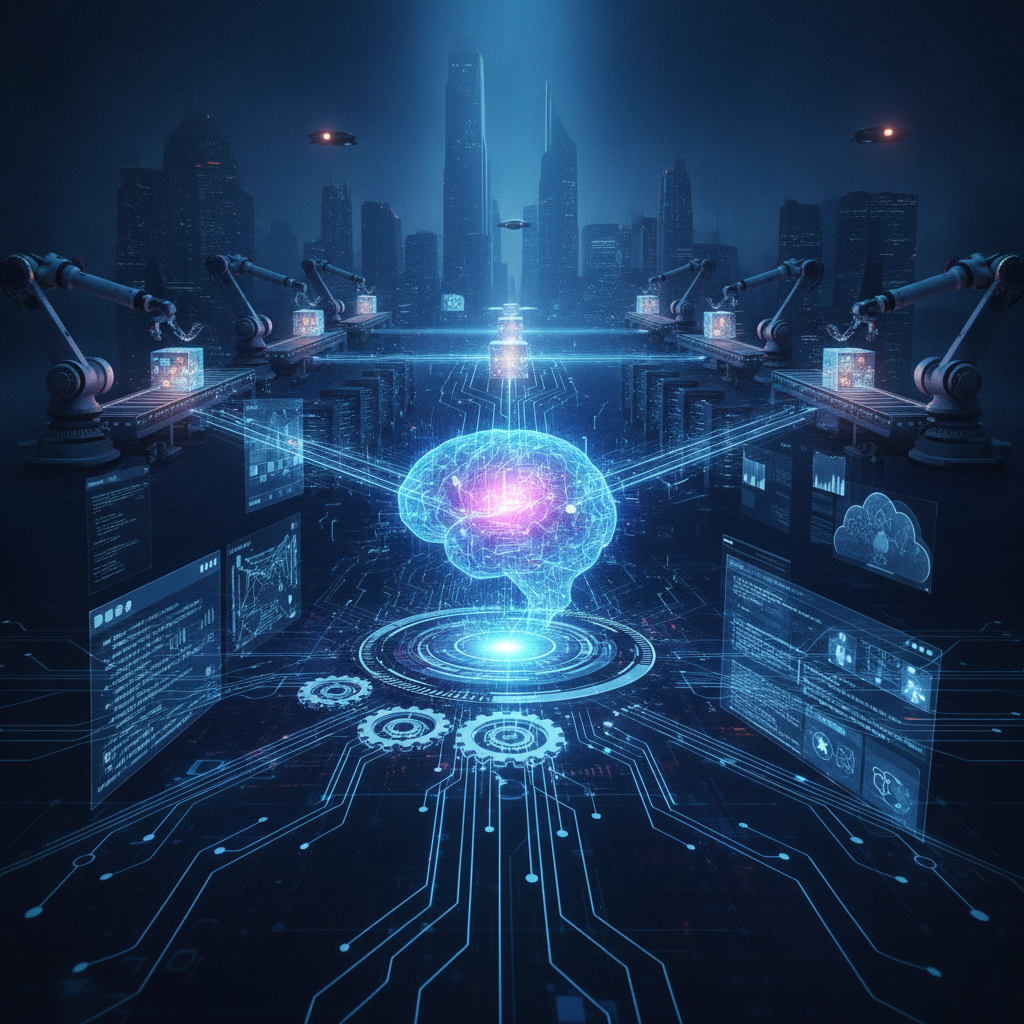
Introduction: The Digital Imperative
In today's fast-paced digital world, businesses constantly strive to deliver software and digital experiences that are not only high-quality but also quick to market. Whether you're an agent relying on cutting-edge website tools or a business owner demanding efficient client portals, the need for robust and rapidly evolving software is paramount. This demand for speed and perfection often clashes with the complexities of traditional software development, leading many to seek innovative solutions.
This is where AI-based software delivery steps in. AI-based software delivery leverages artificial intelligence and machine learning across the entire software development lifecycle to automate tasks, improve efficiency, enhance quality, and accelerate time to market, fundamentally changing how digital products are conceived, built, and maintained.
Understanding this shift is crucial for anyone keen on staying competitive, especially as AI continues to redefine what's possible in digital strategy. To explore more about how AI impacts your online presence, read our article on The Future of SEO for Agents: Navigating AI, AEO, and Agentic Systems.
Understanding AI-Based Software Delivery
AI-based software delivery refers to the integration of artificial intelligence and machine learning technologies at various stages of the software development and operations (DevOps) pipeline. Its primary goal is to automate repetitive tasks, provide intelligent insights, and optimize workflows that traditionally required significant human intervention, leading to faster, more reliable, and cost-effective software production.
Think of it as adding a highly intelligent assistant to every step of your software project, from the initial idea to the final rollout. This isn't just about faster coding; it's about a systemic enhancement of the entire process.
How AI Integrates into the Software Development Lifecycle
AI doesn't just touch one part of software delivery; it weaves through multiple stages:
- Requirements and Design: AI can analyze user feedback, market trends, and existing data to help define product requirements and suggest design patterns, ensuring the software truly meets user needs.
- Development: AI tools assist developers with intelligent code completion, error detection, code generation, and refactoring suggestions, making coding faster and less prone to mistakes.
- Testing and Quality Assurance: AI-powered testing frameworks can generate test cases, automate execution, and predict potential bugs, drastically reducing manual testing efforts and improving software reliability.
- Deployment and Operations: AI monitors application performance in real time, predicts outages, automates incident response, and optimizes resource allocation, ensuring smooth operation and quick recovery from issues.
Key Benefits of Adopting AI in Software Delivery
Integrating AI into software delivery offers a multitude of advantages that translate directly into business value, from faster innovation to superior user experiences.
Accelerated Development Cycles
By automating mundane and repetitive tasks, AI significantly speeds up the development process. This means digital products, updates, and new features can be launched much quicker, allowing businesses to respond rapidly to market changes and user demands. For agents, this could mean faster deployment of new website features or client communication tools.
Improved Code Quality and Reliability
AI tools can analyze vast amounts of code for potential errors, security vulnerabilities, and adherence to best practices far more effectively and consistently than human developers alone. This leads to cleaner, more robust code, reducing bugs and enhancing the overall stability and security of the software.
Enhanced Efficiency and Resource Optimization
With AI handling many routine tasks, human developers can focus on more complex problem-solving, innovation, and creative design. This optimization of human resources, coupled with AI's ability to efficiently manage infrastructure and processes, leads to significant cost savings and better utilization of talent.
Predictive Maintenance and Issue Resolution
AI models can analyze operational data to predict when software components might fail or degrade, enabling proactive maintenance rather than reactive fixes. If an issue does arise, AI can often diagnose the root cause and even suggest or implement solutions automatically, minimizing downtime and disruption.
Practical Applications: Where AI Makes a Difference
AI is not a theoretical concept in software delivery; it's actively being applied in various practical ways today.
AI for Requirements and Design
AI assists product managers and designers by sifting through user data, forum discussions, and support tickets to identify pain points and desired features. For example, an AI could analyze thousands of customer feedback entries to pinpoint the top three most requested improvements for a client portal, guiding the development team towards high-impact features.
AI in Code Generation and Optimization
Developers increasingly use AI assistants that can suggest code snippets, complete functions, or even generate entire modules based on natural language prompts. This significantly reduces coding time and helps maintain consistent coding standards across large projects. AI can also suggest refactorings to improve code efficiency and readability.
AI-Powered Testing and Quality Assurance
One of the most impactful applications is in testing. AI can analyze code changes and automatically generate relevant test cases, identifying edge cases that human testers might miss. It can also prioritize tests based on the likelihood of failure, accelerating the quality assurance process. Imagine an AI running thousands of tests on a new website feature in minutes, highlighting exactly where vulnerabilities might exist.
AI for Deployment and Operations (DevOps)
In the deployment phase, AI helps manage complex infrastructure. It can monitor server performance, predict traffic spikes, and automatically scale resources up or down to ensure optimal performance without manual intervention. For operations, AI can detect anomalies in application behavior, alert teams to potential issues, and even initiate automated recovery procedures, ensuring continuous availability of services.
Pro tip: While AI automates many tasks, human oversight remains critical. AI systems learn from data, and biases or errors in that data can lead to suboptimal or incorrect outputs. Always review and validate AI-generated recommendations and code.
Considerations for Implementing AI in Your Software Strategy
While the benefits are clear, adopting AI-based software delivery isn't without its considerations. It requires careful planning and a strategic approach.
- Data Quality: AI systems thrive on high-quality, relevant data. Ensuring your development and operational data is clean, accessible, and representative is crucial for effective AI integration.
- Skill Gaps: Your team may need new skills in AI literacy, machine learning operations (MLOps), and data science to effectively implement and manage AI-powered tools.
- Integration Complexity: Integrating new AI tools with existing development pipelines and legacy systems can be complex and requires thoughtful architecture design.
- Ethical Implications: As AI takes on more critical roles, considerations around algorithmic bias, transparency, and accountability become increasingly important.
For a broader understanding of how modern digital tools can impact your business, consider our insights on Mastering Modern Digital Marketing: Beyond Just Google Rankings.
The Future of Software Delivery is Intelligent
AI-based software delivery isn't just a trend; it's a foundational shift in how digital products are built and maintained. By embracing AI, businesses can unlock new levels of efficiency, accelerate innovation, and deliver superior software experiences that meet the ever-increasing demands of the modern user. For those at Digicoms, understanding these advancements means being better equipped to leverage technology for success and deliver cutting-edge solutions to clients.
Frequently asked questions
What is the main goal of AI-based software delivery?
The main goal of AI-based software delivery is to automate and optimize various stages of the software development lifecycle, from coding to deployment and operations. This aims to improve efficiency, accelerate time to market, enhance software quality, and reduce overall costs.
How does AI improve code quality?
AI improves code quality by assisting developers with intelligent code suggestions, automatically detecting errors and security vulnerabilities, and suggesting refactoring to adhere to best practices. AI-powered testing tools can also generate comprehensive test cases and identify bugs more effectively than manual methods.
Can AI replace human developers?
No, AI is not designed to replace human developers but rather to augment their capabilities. AI automates repetitive tasks and provides intelligent insights, allowing developers to focus on more complex problem-solving, creative design, and strategic decision-making. It acts as a powerful assistant, not a replacement.
Is AI-based software delivery only for large companies?
While larger companies may have more resources for initial implementation, the benefits of AI in software delivery are increasingly accessible to businesses of all sizes. Many AI-powered development and DevOps tools are available as services, making it easier for smaller teams to integrate AI without massive upfront investments.
What are the biggest challenges in adopting AI for software delivery?
The biggest challenges include ensuring access to high-quality data for AI training, bridging skill gaps within development teams, managing the complexity of integrating new AI tools with existing systems, and addressing ethical considerations related to AI decision-making and potential biases.